| Agency | What they do | People | Location | Website |
|---|---|---|---|---|
| Design Musketeer LLC | Creative and software technology studio | 40 | Europe | |
| inSided | 50 - 249 | Europe | www.insided.com/ | |
| GlobalOrange | Its website shows a portfolio, prices and its team. We did not find case studies or an address there. | 50 - 249 | Europe | www.globalorange.nl/ |
| Your Next Agency | Its website shows a portfolio, case studies, prices and its team. We did not find an address there. | 10 - 49 | Europe | yournextagency.com/ |
| Kellton | 1,000 - 9,999 | Europe | www.kelltontech.com | |
| Homerun.co | Its website shows a portfolio, prices and its team. We did not find case studies or an address there. | 2 - 9 | Europe | www.homerun.co/ |
| WeAreBrain | Its website shows a portfolio, case studies, its team and an address. We did not find prices there. | 50 - 249 | Europe | www.wearebrain.com |
| Born Digital Studio | 2 - 9 | Europe | www.borndigitalstudio.com/ | |
| Uniface | 50 - 249 | Europe | www.uniface.com/ | |
| Dashmote | Its website shows a portfolio, case studies, its team and an address. We did not find prices there. | 50 - 249 | Europe | www.dashmote.com/ |
| Clevergig | Its website shows an address. We did not find a portfolio, case studies, prices or a named team there. | 2 - 9 | Europe | www.clevergig.nl/ |
| Modyo Chile | Its website shows case studies, its team and an address. We did not find a portfolio or prices there. | 50 - 249 | Europe | www.modyo.com/ |
| Lizard Global | Its website shows a portfolio, case studies, prices and its team. We did not find an address there. | 10 - 49 | Europe | lizard.global |
| Under Reality | 10 - 49 | Europe | underreality.com |
8 categories
Development & Product
5 categories
Creative & Visual
Video & Production
Design & Creation
10 categories
Advertising & Marketing
23 categories · 3 groups
All categories
Development & Product 8
Creative & Visual 5
Best Software Development and IT Services Companies in Europe
Discover and compare agencies within minutes.
- 40,000+brands
- trust us since 2019
- 500+agencies
- carefully vetted
- 5,000+projects
- successfully completed








Top Rated Software Companies in Europe
14+ agencies in this category
See Software Development pricing data 2026 by country →
This page lists 14 software development and IT companies on Edvido. Edvido is not an agency but a smart platform, free for brands: send your brief, get matched right away, completely free.
Search services
Search location
Edvido Agency Index: Software companies in Europe
An open-methodology index of software companies in Europe. We score publicly verifiable signals from each agency's own website and public sources on a 100-point scale. We do not rate the quality of work, and positions are not for sale — Edvido membership does not affect the index score. How the scores work · Data (JSON)
| # | Agency | Score | Info | Prices | Proof | Reputation | Contact | Visibility |
|---|---|---|---|---|---|---|---|---|
| 1 | Lizard Global | 57.5 | 15.5/20 | 7/15 | 20/20 | 0/20 | 10/10 | 5/15 |
| 2 | Homerun.co | 53.5 | 15.5/20 | 15/15 | 8/20 | 0/20 | 10/10 | 5/15 |
| 3 | WeAreBrain | 52 | 20/20 | 0/15 | 20/20 | 0/20 | 7/10 | 5/15 |
| 4 | Dashmote | 51 | 17/20 | 8/15 | 14/20 | 0/20 | 7/10 | 5/15 |
| 5 | Your Next Agency | 50 | 17/20 | 7/15 | 14/20 | 0/20 | 7/10 | 5/15 |
| 6 | Modyo Chile | 44 | 20/20 | 0/15 | 12/20 | 0/20 | 7/10 | 5/15 |
| 7 | GlobalOrange | 38.5 | 11.5/20 | 15/15 | 8/20 | 0/20 | 4/10 | 0/15 |
| 8 | Clevergig | 18.5 | 10.5/20 | 0/15 | 0/20 | 0/20 | 3/10 | 5/15 |
Last checked 14 October 2026 · method v0.1-pilot. Unverified data scores 0 points and is listed as "unverified", not as a negative finding. Not ranked (5) — the agency's website could not be checked or is not listed: Born Digital Studio, inSided, Kellton, Under Reality, Uniface.
#1 · Lizard Global — 57.5/100
Lizard Global
Lizard Global scored 57.5/100 on the Edvido Agency Index — rank #1 of 8 ranked software companies in Europe. Last checked: 14 October 2026.
Measures publicly verifiable transparency and visibility signals, not the quality of work. Not an Edvido member; membership would not change the score.
Its website publishes a portfolio, case studies, prices and its team. We could not find a physical address on its website.
Information transparency15.5 / 20
| ✓ | Secure website (HTTPS) [s1] | 3/3 |
| ✓ | About page published [s2] | 4/4 |
| ✓ | Team or founders named [s2] | 4/4 |
| ◐ | Service list published [s1] | 1.5/3 |
| ✗ | Physical address published [s4] | 0/3 |
| ✓ | Phone or email published [s4] | 3/3 |
Price transparency7 / 15
| ✗ | Pricing or packages page [s1] | 0/8 |
| ✓ | At least one price published [s1] | 7/7 |
Portfolio & proof of work20 / 20
| ✓ | Portfolio or work page [s3] | 8/8 |
| ✓ | Case studies with results [s3] | 6/6 |
| ✓ | Named clients or testimonials [s1] | 6/6 |
Public reputation0 / 20
| ? | Google rating (Bayesian-adjusted) Not yet collected in this pilot | 0/10 |
| ? | Google review volume Not yet collected in this pilot | 0/5 |
| ? | Recent reviews (last 12 months) Not yet collected in this pilot | 0/5 |
Communication & accessibility10 / 10
| ✓ | Contact page or form [s4] | 4/4 |
| ✓ | English-language website [s1] | 3/3 |
| ✓ | Instant channel (WhatsApp / chat) [s1] | 3/3 |
Digital & AI visibility5 / 15
| ✓ | Organization structured data on website [s1] | 5/5 |
| ? | Named by AI assistants for local queries Not yet measured in this pilot | 0/10 |
✓ verified · ✗ not found · ◐ partial · ? unverified (0 points, not a negative finding)
Data we could not verify: Google rating (Bayesian-adjusted), Google review volume, Recent reviews (last 12 months), Named by AI assistants for local queries.
Sources
| s1 | lizard.global/en | Homepage | 2026-10-14 |
| s2 | lizard.global/en/about-us | About page | 2026-10-14 |
| s3 | lizard.global/en/works/heineken-drinkies | Portfolio page | 2026-10-14 |
| s4 | lizard.global/en/contact-us | Contact page | 2026-10-14 |
Is this your agency? Claim the profile to correct data or respond to briefs from brands. Claiming or joining Edvido does not change the index score.
#2 · Homerun.co — 53.5/100
Homerun.co
Homerun.co scored 53.5/100 on the Edvido Agency Index — rank #2 of 8 ranked software companies in Europe. Last checked: 14 October 2026.
Measures publicly verifiable transparency and visibility signals, not the quality of work. Not an Edvido member; membership would not change the score.
Its website publishes a portfolio, prices and its team. We could not find case studies and a physical address on its website.
Information transparency15.5 / 20
| ✓ | Secure website (HTTPS) [s1] | 3/3 |
| ✓ | About page published [s2] | 4/4 |
| ✓ | Team or founders named [s2] | 4/4 |
| ◐ | Service list published [s1] | 1.5/3 |
| ✗ | Physical address published [s5] | 0/3 |
| ✓ | Phone or email published [s5] | 3/3 |
Price transparency15 / 15
| ✓ | Pricing or packages page [s3] | 8/8 |
| ✓ | At least one price published [s3] | 7/7 |
Portfolio & proof of work8 / 20
| ✓ | Portfolio or work page [s4] | 8/8 |
| ✗ | Case studies with results [s4] | 0/6 |
| ✗ | Named clients or testimonials [s1] | 0/6 |
Public reputation0 / 20
| ? | Google rating (Bayesian-adjusted) Not yet collected in this pilot | 0/10 |
| ? | Google review volume Not yet collected in this pilot | 0/5 |
| ? | Recent reviews (last 12 months) Not yet collected in this pilot | 0/5 |
Communication & accessibility10 / 10
| ✓ | Contact page or form [s5] | 4/4 |
| ✓ | English-language website [s1] | 3/3 |
| ✓ | Instant channel (WhatsApp / chat) [s1] | 3/3 |
Digital & AI visibility5 / 15
| ✓ | Organization structured data on website [s1] | 5/5 |
| ? | Named by AI assistants for local queries Not yet measured in this pilot | 0/10 |
✓ verified · ✗ not found · ◐ partial · ? unverified (0 points, not a negative finding)
Data we could not verify: Google rating (Bayesian-adjusted), Google review volume, Recent reviews (last 12 months), Named by AI assistants for local queries.
Sources
| s1 | homerun.co | Homepage | 2026-10-14 |
| s2 | homerun.co/about | About page | 2026-10-14 |
| s3 | homerun.co/pricing | Pricing page | 2026-10-14 |
| s4 | homerun.co/artofwork/newsletter | Portfolio page | 2026-10-14 |
| s5 | homerun.co/contact | Contact page | 2026-10-14 |
Is this your agency? Claim the profile to correct data or respond to briefs from brands. Claiming or joining Edvido does not change the index score.
#3 · WeAreBrain — 52/100
WeAreBrain
WeAreBrain scored 52/100 on the Edvido Agency Index — rank #3 of 8 ranked software companies in Europe. Last checked: 14 October 2026.
Measures publicly verifiable transparency and visibility signals, not the quality of work. Not an Edvido member; membership would not change the score.
Its website publishes a portfolio, case studies, its team and a physical address. We could not find prices on its website.
Information transparency20 / 20
| ✓ | Secure website (HTTPS) [s1] | 3/3 |
| ✓ | About page published [s2] | 4/4 |
| ✓ | Team or founders named [s2] | 4/4 |
| ✓ | Service list published [s5] | 3/3 |
| ✓ | Physical address published [s4] | 3/3 |
| ✓ | Phone or email published [s4] | 3/3 |
Price transparency0 / 15
| ✗ | Pricing or packages page [s1] | 0/8 |
| ✗ | At least one price published [s1] | 0/7 |
Portfolio & proof of work20 / 20
| ✓ | Portfolio or work page [s3] | 8/8 |
| ✓ | Case studies with results [s3] | 6/6 |
| ✓ | Named clients or testimonials [s1] | 6/6 |
Public reputation0 / 20
| ? | Google rating (Bayesian-adjusted) Not yet collected in this pilot | 0/10 |
| ? | Google review volume Not yet collected in this pilot | 0/5 |
| ? | Recent reviews (last 12 months) Not yet collected in this pilot | 0/5 |
Communication & accessibility7 / 10
| ✓ | Contact page or form [s4] | 4/4 |
| ✓ | English-language website [s1] | 3/3 |
| ✗ | Instant channel (WhatsApp / chat) [s1] | 0/3 |
Digital & AI visibility5 / 15
| ✓ | Organization structured data on website [s1] | 5/5 |
| ? | Named by AI assistants for local queries Not yet measured in this pilot | 0/10 |
✓ verified · ✗ not found · ◐ partial · ? unverified (0 points, not a negative finding)
Data we could not verify: Google rating (Bayesian-adjusted), Google review volume, Recent reviews (last 12 months), Named by AI assistants for local queries.
Sources
| s1 | wearebrain.com | Homepage | 2026-10-14 |
| s2 | wearebrain.com/about | About page | 2026-10-14 |
| s3 | wearebrain.com/work | Portfolio page | 2026-10-14 |
| s4 | wearebrain.com/contact | Contact page | 2026-10-14 |
| s5 | wearebrain.com/services/ai-transformation | Services page | 2026-10-14 |
Is this your agency? Claim the profile to correct data or respond to briefs from brands. Claiming or joining Edvido does not change the index score.
#4 · Dashmote — 51/100
Dashmote
Dashmote scored 51/100 on the Edvido Agency Index — rank #4 of 8 ranked software companies in Europe. Last checked: 14 October 2026.
Measures publicly verifiable transparency and visibility signals, not the quality of work. Not an Edvido member; membership would not change the score.
Its website publishes a portfolio, case studies, its team and a physical address. We could not find prices on its website.
Information transparency17 / 20
| ✓ | Secure website (HTTPS) [s1] | 3/3 |
| ✓ | About page published [s2] | 4/4 |
| ✓ | Team or founders named [s2] | 4/4 |
| ✓ | Service list published [s6] | 3/3 |
| ✓ | Physical address published [s5] | 3/3 |
| ✗ | Phone or email published [s5] | 0/3 |
Price transparency8 / 15
| ✓ | Pricing or packages page [s3] | 8/8 |
| ✗ | At least one price published [s3] | 0/7 |
Portfolio & proof of work14 / 20
| ✓ | Portfolio or work page [s4] | 8/8 |
| ✓ | Case studies with results [s4] | 6/6 |
| ✗ | Named clients or testimonials [s1] | 0/6 |
Public reputation0 / 20
| ? | Google rating (Bayesian-adjusted) Not yet collected in this pilot | 0/10 |
| ? | Google review volume Not yet collected in this pilot | 0/5 |
| ? | Recent reviews (last 12 months) Not yet collected in this pilot | 0/5 |
Communication & accessibility7 / 10
| ✓ | Contact page or form [s5] | 4/4 |
| ✓ | English-language website [s1] | 3/3 |
| ✗ | Instant channel (WhatsApp / chat) [s1] | 0/3 |
Digital & AI visibility5 / 15
| ✓ | Organization structured data on website [s1] | 5/5 |
| ? | Named by AI assistants for local queries Not yet measured in this pilot | 0/10 |
✓ verified · ✗ not found · ◐ partial · ? unverified (0 points, not a negative finding)
Data we could not verify: Google rating (Bayesian-adjusted), Google review volume, Recent reviews (last 12 months), Named by AI assistants for local queries.
Sources
| s1 | dashmote.com | Homepage | 2026-10-14 |
| s2 | dashmote.com/about | About page | 2026-10-14 |
| s3 | dashmote.com/pricing | Pricing page | 2026-10-14 |
| s4 | dashmote.com/how-pricing-works | Portfolio page | 2026-10-14 |
| s5 | dashmote.com/contact | Contact page | 2026-10-14 |
| s6 | dashmote.com/story/unilever-food-solutions | Services page | 2026-10-14 |
Is this your agency? Claim the profile to correct data or respond to briefs from brands. Claiming or joining Edvido does not change the index score.
#5 · Your Next Agency — 50/100
Your Next Agency
Your Next Agency scored 50/100 on the Edvido Agency Index — rank #5 of 8 ranked software companies in Europe. Last checked: 14 October 2026.
Measures publicly verifiable transparency and visibility signals, not the quality of work. Not an Edvido member; membership would not change the score.
Its website publishes a portfolio, case studies, prices and its team. We could not find a physical address on its website.
Information transparency17 / 20
| ✓ | Secure website (HTTPS) [s1] | 3/3 |
| ✓ | About page published [s2] | 4/4 |
| ✓ | Team or founders named [s2] | 4/4 |
| ✓ | Service list published [s5] | 3/3 |
| ✗ | Physical address published [s1] | 0/3 |
| ✓ | Phone or email published [s1] | 3/3 |
Price transparency7 / 15
| ✗ | Pricing or packages page [s1] | 0/8 |
| ✓ | At least one price published [s1] | 7/7 |
Portfolio & proof of work14 / 20
| ✓ | Portfolio or work page [s3] | 8/8 |
| ✓ | Case studies with results [s4] | 6/6 |
| ✗ | Named clients or testimonials [s1] | 0/6 |
Public reputation0 / 20
| ? | Google rating (Bayesian-adjusted) Not yet collected in this pilot | 0/10 |
| ? | Google review volume Not yet collected in this pilot | 0/5 |
| ? | Recent reviews (last 12 months) Not yet collected in this pilot | 0/5 |
Communication & accessibility7 / 10
| ✓ | Contact page or form [s1] | 4/4 |
| ✓ | English-language website [s1] | 3/3 |
| ✗ | Instant channel (WhatsApp / chat) [s1] | 0/3 |
Digital & AI visibility5 / 15
| ✓ | Organization structured data on website [s1] | 5/5 |
| ? | Named by AI assistants for local queries Not yet measured in this pilot | 0/10 |
✓ verified · ✗ not found · ◐ partial · ? unverified (0 points, not a negative finding)
Data we could not verify: Google rating (Bayesian-adjusted), Google review volume, Recent reviews (last 12 months), Named by AI assistants for local queries.
Sources
| s1 | yournextagency.com | Homepage | 2026-10-14 |
| s2 | yournextagency.com/about | About page | 2026-10-14 |
| s3 | yournextagency.com/cases/ziz-clinical-workflow-automation | Portfolio page | 2026-10-14 |
| s4 | yournextagency.com/cases | Case studies | 2026-10-14 |
| s5 | yournextagency.com/what-we-do/websites | Services page | 2026-10-14 |
Is this your agency? Claim the profile to correct data or respond to briefs from brands. Claiming or joining Edvido does not change the index score.
#6 · Modyo Chile — 44/100
Modyo Chile
Modyo Chile scored 44/100 on the Edvido Agency Index — rank #6 of 8 ranked software companies in Europe. Last checked: 14 October 2026.
Measures publicly verifiable transparency and visibility signals, not the quality of work. Not an Edvido member; membership would not change the score.
Its website publishes case studies, its team and a physical address. We could not find a portfolio and prices on its website.
Information transparency20 / 20
| ✓ | Secure website (HTTPS) [s1] | 3/3 |
| ✓ | About page published [s2] | 4/4 |
| ✓ | Team or founders named [s2] | 4/4 |
| ✓ | Service list published [s3] | 3/3 |
| ✓ | Physical address published [s1] | 3/3 |
| ✓ | Phone or email published [s1] | 3/3 |
Price transparency0 / 15
| ✗ | Pricing or packages page [s1] | 0/8 |
| ✗ | At least one price published [s1] | 0/7 |
Portfolio & proof of work12 / 20
| ✗ | Portfolio or work page [s1] | 0/8 |
| ✓ | Case studies with results [s1] | 6/6 |
| ✓ | Named clients or testimonials [s1] | 6/6 |
Public reputation0 / 20
| ? | Google rating (Bayesian-adjusted) Not yet collected in this pilot | 0/10 |
| ? | Google review volume Not yet collected in this pilot | 0/5 |
| ? | Recent reviews (last 12 months) Not yet collected in this pilot | 0/5 |
Communication & accessibility7 / 10
| ✓ | Contact page or form [s1] | 4/4 |
| ✓ | English-language website [s1] | 3/3 |
| ✗ | Instant channel (WhatsApp / chat) [s1] | 0/3 |
Digital & AI visibility5 / 15
| ✓ | Organization structured data on website [s1] | 5/5 |
| ? | Named by AI assistants for local queries Not yet measured in this pilot | 0/10 |
✓ verified · ✗ not found · ◐ partial · ? unverified (0 points, not a negative finding)
Data we could not verify: Google rating (Bayesian-adjusted), Google review volume, Recent reviews (last 12 months), Named by AI assistants for local queries.
Sources
| s1 | modyo.com | Homepage | 2026-10-14 |
| s2 | modyo.com/company | About page | 2026-10-14 |
| s3 | modyo.com/solutions/web-and-mobile-experiences | Services page | 2026-10-14 |
Is this your agency? Claim the profile to correct data or respond to briefs from brands. Claiming or joining Edvido does not change the index score.
#7 · GlobalOrange — 38.5/100
GlobalOrange
GlobalOrange scored 38.5/100 on the Edvido Agency Index — rank #7 of 8 ranked software companies in Europe. Last checked: 14 October 2026.
Measures publicly verifiable transparency and visibility signals, not the quality of work. Not an Edvido member; membership would not change the score.
Its website publishes a portfolio, prices and its team. We could not find case studies and a physical address on its website.
Information transparency11.5 / 20
| ✓ | Secure website (HTTPS) [s1] | 3/3 |
| ✗ | About page published [s1] | 0/4 |
| ✓ | Team or founders named [s2] | 4/4 |
| ◐ | Service list published [s1] | 1.5/3 |
| ✗ | Physical address published [s5] | 0/3 |
| ✓ | Phone or email published [s5] | 3/3 |
Price transparency15 / 15
| ✓ | Pricing or packages page [s3] | 8/8 |
| ✓ | At least one price published [s3] | 7/7 |
Portfolio & proof of work8 / 20
| ✓ | Portfolio or work page [s4] | 8/8 |
| ✗ | Case studies with results [s4] | 0/6 |
| ✗ | Named clients or testimonials [s1] | 0/6 |
Public reputation0 / 20
| ? | Google rating (Bayesian-adjusted) Not yet collected in this pilot | 0/10 |
| ? | Google review volume Not yet collected in this pilot | 0/5 |
| ? | Recent reviews (last 12 months) Not yet collected in this pilot | 0/5 |
Communication & accessibility4 / 10
| ✓ | Contact page or form [s5] | 4/4 |
| ✗ | English-language website [s1] | 0/3 |
| ✗ | Instant channel (WhatsApp / chat) [s1] | 0/3 |
Digital & AI visibility0 / 15
| ✗ | Organization structured data on website [s1] | 0/5 |
| ? | Named by AI assistants for local queries Not yet measured in this pilot | 0/10 |
✓ verified · ✗ not found · ◐ partial · ? unverified (0 points, not a negative finding)
Data we could not verify: Google rating (Bayesian-adjusted), Google review volume, Recent reviews (last 12 months), Named by AI assistants for local queries.
Sources
| s1 | globalorange.nl | Homepage | 2026-10-14 |
| s2 | globalorange.nl/human-agentic-teams | Team page | 2026-10-14 |
| s3 | globalorange.nl/kennis/het-saas-groeiplafond-churn-en-pricing | Pricing page | 2026-10-14 |
| s4 | globalorange.nl/diensten/product-discovery-workshop | Portfolio page | 2026-10-14 |
| s5 | globalorange.nl/contact | Contact page | 2026-10-14 |
Is this your agency? Claim the profile to correct data or respond to briefs from brands. Claiming or joining Edvido does not change the index score.
#8 · Clevergig — 18.5/100
Clevergig
Clevergig scored 18.5/100 on the Edvido Agency Index — rank #8 of 8 ranked software companies in Europe. Last checked: 14 October 2026.
Measures publicly verifiable transparency and visibility signals, not the quality of work. Not an Edvido member; membership would not change the score.
Its website publishes a physical address. We could not find a portfolio, case studies, prices and its team on its website.
Information transparency10.5 / 20
| ✓ | Secure website (HTTPS) [s1] | 3/3 |
| ✗ | About page published [s1] | 0/4 |
| ✗ | Team or founders named [s1] | 0/4 |
| ◐ | Service list published [s1] | 1.5/3 |
| ✓ | Physical address published [s1] | 3/3 |
| ✓ | Phone or email published [s1] | 3/3 |
Price transparency0 / 15
| ✗ | Pricing or packages page [s1] | 0/8 |
| ✗ | At least one price published [s1] | 0/7 |
Portfolio & proof of work0 / 20
| ✗ | Portfolio or work page [s1] | 0/8 |
| ✗ | Case studies with results [s1] | 0/6 |
| ✗ | Named clients or testimonials [s1] | 0/6 |
Public reputation0 / 20
| ? | Google rating (Bayesian-adjusted) Not yet collected in this pilot | 0/10 |
| ? | Google review volume Not yet collected in this pilot | 0/5 |
| ? | Recent reviews (last 12 months) Not yet collected in this pilot | 0/5 |
Communication & accessibility3 / 10
| ✗ | Contact page or form [s1] | 0/4 |
| ✗ | English-language website [s1] | 0/3 |
| ✓ | Instant channel (WhatsApp / chat) [s1] | 3/3 |
Digital & AI visibility5 / 15
| ✓ | Organization structured data on website [s1] | 5/5 |
| ? | Named by AI assistants for local queries Not yet measured in this pilot | 0/10 |
✓ verified · ✗ not found · ◐ partial · ? unverified (0 points, not a negative finding)
Data we could not verify: Google rating (Bayesian-adjusted), Google review volume, Recent reviews (last 12 months), Named by AI assistants for local queries.
Sources
| s1 | clevergig.nl/nl | Homepage | 2026-10-14 |
Is this your agency? Claim the profile to correct data or respond to briefs from brands. Claiming or joining Edvido does not change the index score.
Born Digital Studio — not ranked
Born Digital Studio
Listed among software companies in Europe but not ranked: Website did not respond on 2026-10-14.
Measures publicly verifiable transparency and visibility signals, not the quality of work. Not an Edvido member; membership would not change the score.
Is this your agency? Claim the profile to correct data or respond to briefs from brands. Claiming or joining Edvido does not change the index score.
inSided — not ranked
inSided
Listed among software companies in Europe but not ranked: Website blocked our automated check on 2026-10-14.
Measures publicly verifiable transparency and visibility signals, not the quality of work. Not an Edvido member; membership would not change the score.
Is this your agency? Claim the profile to correct data or respond to briefs from brands. Claiming or joining Edvido does not change the index score.
Kellton — not ranked
Kellton
Listed among software companies in Europe but not ranked: Website now redirects to another domain (www.kellton.com) on 2026-10-14.
Measures publicly verifiable transparency and visibility signals, not the quality of work. Not an Edvido member; membership would not change the score.
Is this your agency? Claim the profile to correct data or respond to briefs from brands. Claiming or joining Edvido does not change the index score.
Under Reality — not ranked
Under Reality
Listed among software companies in Europe but not ranked: Website content could not be read automatically on 2026-10-14.
Measures publicly verifiable transparency and visibility signals, not the quality of work. Not an Edvido member; membership would not change the score.
Is this your agency? Claim the profile to correct data or respond to briefs from brands. Claiming or joining Edvido does not change the index score.
Uniface — not ranked
Uniface
Listed among software companies in Europe but not ranked: Website now redirects to another domain (www.rocketsoftware.com) on 2026-10-14.
Measures publicly verifiable transparency and visibility signals, not the quality of work. Not an Edvido member; membership would not change the score.
Is this your agency? Claim the profile to correct data or respond to briefs from brands. Claiming or joining Edvido does not change the index score.
Order comes from the Edvido assessment, which considers signals such as expertise, portfolio, brands worked with, client satisfaction, profile completeness, digital visibility and membership plan. It is not a quality score. How this list is ordered

Design Musketeer LLC
Software Development
Creative and software technology studio
10 years in business · 5 portfolio items
40members
From$1,000+forSoftware Development
Located inEurope
inSided
Software Development
50 - 249members
Located inEurope
GlobalOrange
Software Development
Its website shows a portfolio, prices and its team. We did not find case studies or an address there.
Edvido Index#7/838.5/100details50 - 249members
Located inEurope
Get offers from experienced agencies tailored to your goals.
Your Next Agency
Software Development
Its website shows a portfolio, case studies, prices and its team. We did not find an address there.
Edvido Index#5/850/100details10 - 49members
Located inEurope
Kellton
Software Development
1,000 - 9,999members
Located inEurope
Homerun.co
Software Development
Its website shows a portfolio, prices and its team. We did not find case studies or an address there.
Edvido Index#2/853.5/100details2 - 9members
Located inEurope
Get offers from experienced agencies tailored to your goals.
WeAreBrain
Software Development
Its website shows a portfolio, case studies, its team and an address. We did not find prices there.
Edvido Index#3/852/100details50 - 249members
Located inEurope
Born Digital Studio
Software Development
2 - 9members
Located inEurope
Uniface
Software Development
50 - 249members
Located inEurope
Dashmote
Software Development
Its website shows a portfolio, case studies, its team and an address. We did not find prices there.
Edvido Index#4/851/100details50 - 249members
Located inEurope
Clevergig
Software Development
Its website shows an address. We did not find a portfolio, case studies, prices or a named team there.
Edvido Index#8/818.5/100details2 - 9members
Located inEurope
Modyo Chile
Software Development
Its website shows case studies, its team and an address. We did not find a portfolio or prices there.
Edvido Index#6/844/100details50 - 249members
Located inEurope
Lizard Global
Software Development
Its website shows a portfolio, case studies, prices and its team. We did not find an address there.
Edvido Index#1/857.5/100details10 - 49members
Located inEurope
Under Reality
Software Development
10 - 49members
Located inEurope

Connect. Convert. Grow.
Start your project today without any cost and meet qualified experts who can get the job done. We help you make the best choice, hassle-free.
- Send your brief, get matched right away
- millions in revenue created
Explore Software Development Companies in Europe
Didn't find what you were looking for? Browse other categories
Cities
- Software Development Companies in Zagreb· 7 agencies scored
- Software Development Companies in Berlin· 8 agencies scored
- Software Development Companies in Hamburg· 9 agencies scored
- Software Development Companies in Budapest· 9 agencies scored
- Software Development Companies in Oslo· 12 agencies scored
- Software Development Companies in Belgrade· 11 agencies scored
- Software Development Companies in Madrid· 7 agencies scored
- Software Development Companies in Zürich· 10 agencies scored
- Software Development Companies in Amsterdam· 7 agencies scored
- Software Development Companies in Copenhagen· 13 agencies scored
- Software Development Companies in Milan· 10 agencies scored
- Software Development Companies in Rotterdam· 7 agencies scored
- Software Development Companies in Stockholm· 8 agencies scored
- Software Development Companies in Munich· 8 agencies scored
- Software Development Companies in Athens· 11 agencies scored
- Software Development Companies in Katowice· 9 agencies scored
- Software Development Companies in Wroclaw· 7 agencies scored
- Software Development Companies in Krakow· 1 agencies scored
Regions
- Software Development Companies in Asia· 7 agencies scored
- Software Development Companies in MENA· 12 agencies scored
- Software Development Companies in UK· 11 agencies scored
Categories
- Animation Studios in Europe· 3 agencies scored
- Digital Marketing Agencies in Europe· 10 agencies scored
- Mobile App Companies in Europe· 8 agencies scored
- PR Agencies in Europe· 11 agencies scored
- SEO Agencies in Europe· 7 agencies scored
- Social Media Agencies in Europe· 7 agencies scored
- Web Design Agencies in Europe· 5 agencies scored
- Web Development Companies in Europe· 10 agencies scored
Recommended for You
Discover services
Europe Software Development Companies List (14)
Europe Software Development Companies Prices
| Software Development Companies | Prices |
| Design Musketeer LLC | $1,000+ |
Sample Software Development Requests
Examples of common request types in Software Development
What Our Clients Are Saying About Edvido

Hakan Yılmaz
Managing Director at Pronto Eventi
Web & Mobile App
At Pronto Eventi, we used Edvido to find the right partner for our website and mobile app, and we are truly happy with the result. Steps that would normally take us hours — researching different companies, contacting them one by one, sending emails and collecting proposals — were completed in minutes thanks to Edvido. We saved a great deal of time and significantly reduced our workload. Beyond simplifying the process, it matched us with a vendor that fits our needs and that we are extremely happy to work with. From our own experience, Edvido truly makes finding the right partner easier. We wholeheartedly recommend it to every company that wants to use its time more efficiently and reach the right solution partners.

Elif Cetinkaya
Region Manager at Danone Nutricia
Agency Selection
Edvido gave us fast, high-quality support during our agency selection. It's the only address you can choose with trust in this field.

Seda Yimenicioglu
Product Manager at Orzax Pharmaceuticals
SEO
I use Edvido frequently. It reduces processes that would take weeks to a few days. I am also incredibly pleased with the SEO agency we work with.

Nazli Acar
Vivoo
Creative Agency
We were looking for an agency that could do business on a global scale. We started working with an amazing creative agency through Edvido.

Gülin Özgen
Marketing Director at Kingston
Business Partnerships
Edvido is a very good platform for companies looking for new business partners. The match was perfect. Thank you Edvido.

Murat Sargın
Board Member at the Turkish Society of Cardiovascular Surgery
Social Media
We concluded our association's search for a social media agency on Edvido. We have a great cooperation with the team we work with.
Metin Uysal
Etkin Group
Software
We were looking for the right company to develop our digital product. Thanks to Edvido, we quickly found the software company that best suited our needs and vision. The process was both fast and highly efficient; working with the right team gave our project a strong start.

Sedat Coşkun
Epikplus CEO
Business Partnerships
If you want to grow, becoming an Edvido member is a must.
Blog & Insights
Explore our marketing and software focused content
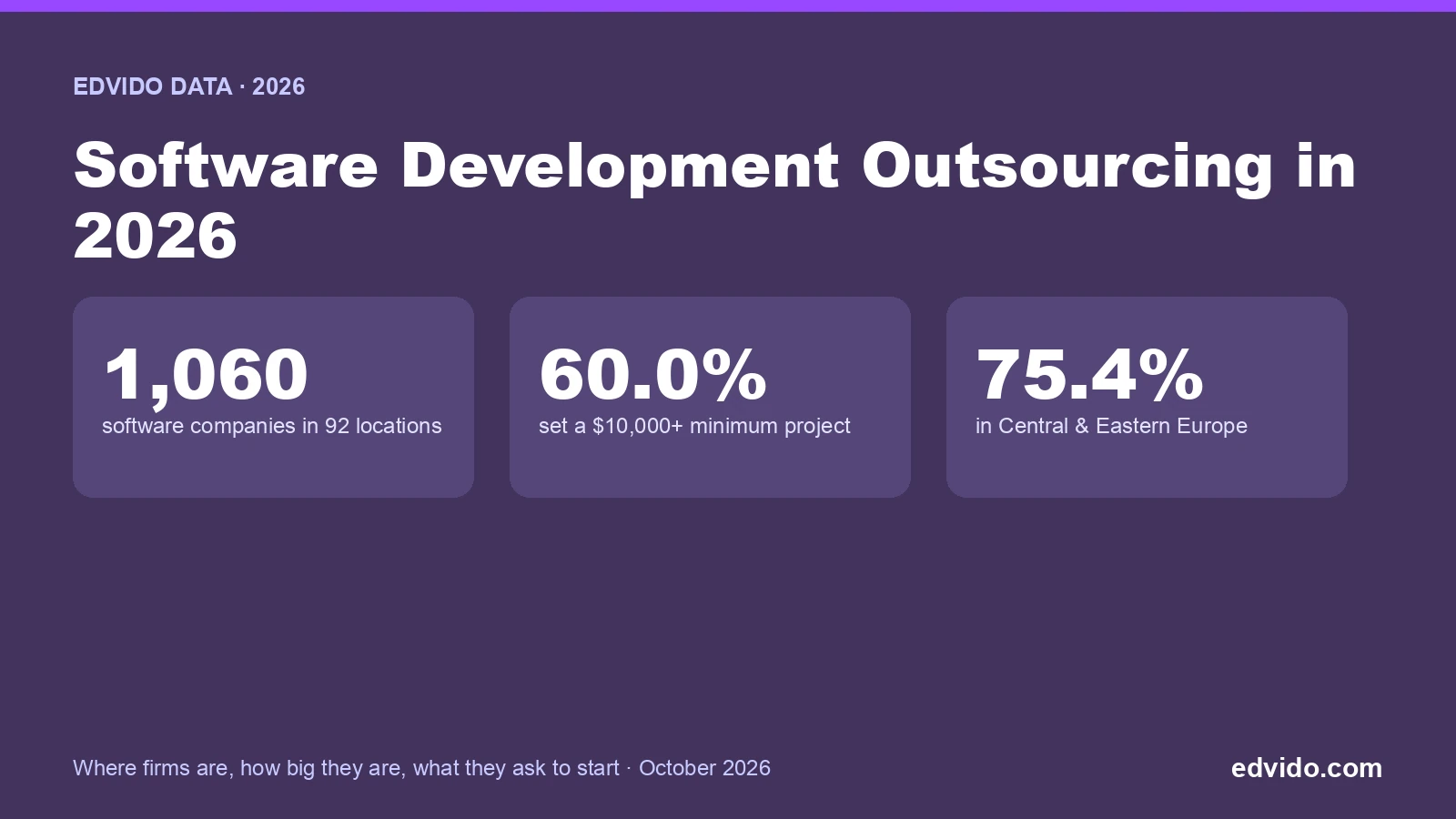

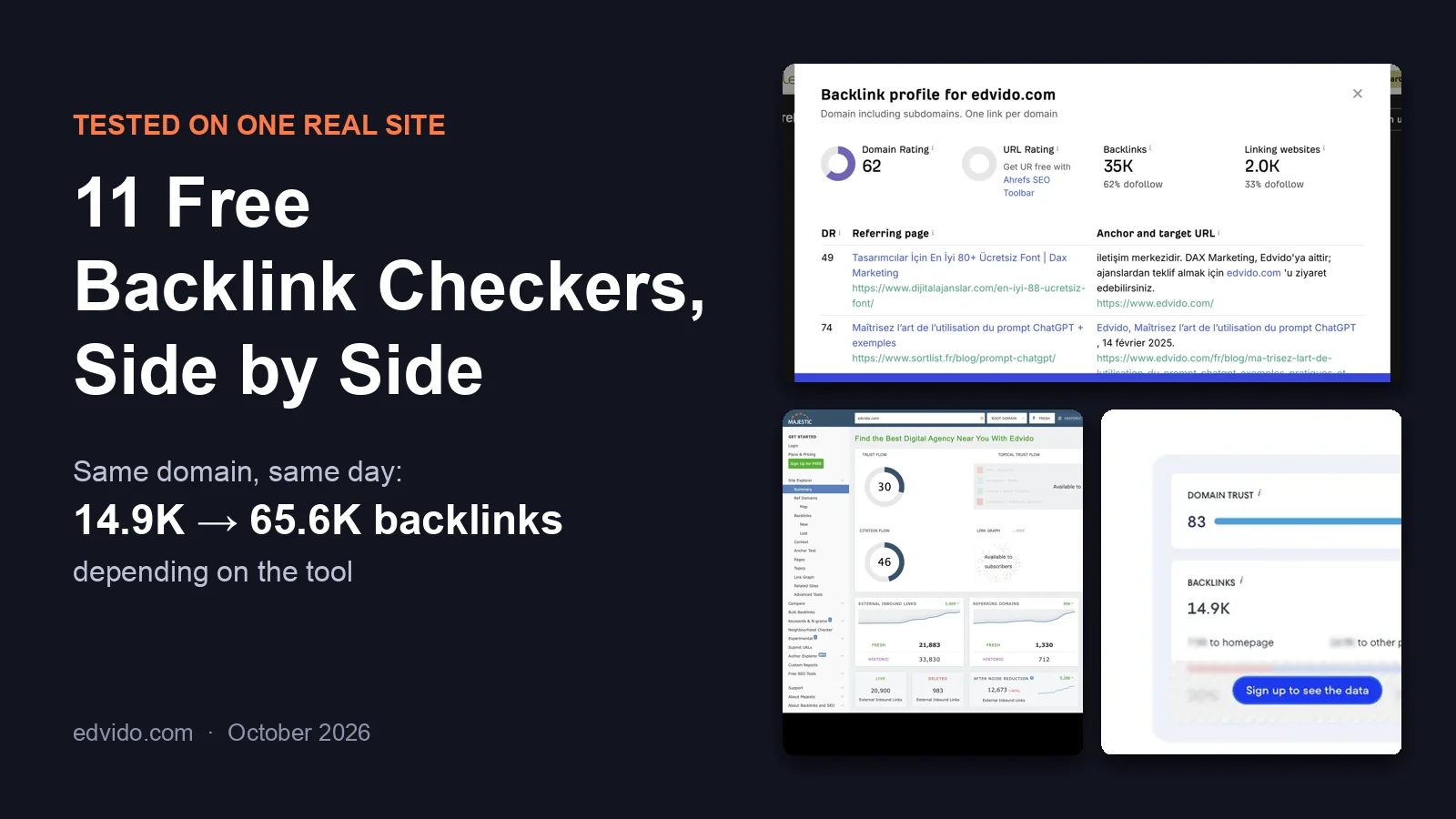









This page presents 14 software companies in Europe, each with a profile describing what they build, the platforms they use and the clients they have served. Under the list, we explain what development firms in Europe usually offer, how to assess their approach to security and data protection, what determines software cost and what to ask before you sign a contract.
Rather than contacting firms individually, you can share one brief with software teams in Europe and compare their answers.
What services do software companies in Europe offer?
Firms across Europe cover the full development cycle. Common offerings are:
- Custom enterprise applications for operations, finance, HR or logistics.
- Multilingual web platforms serving users in several countries and languages.
- SaaS development with subscription billing and tenant separation.
- Integration projects linking ERP, CRM, payments and analytics.
- Legacy modernisation with minimal disruption to daily work.
- Cloud architecture, often with a focus on where data is stored.
- Security testing and code audits.
- Support and maintenance under service-level agreements.
For a phone-first product, compare a mobile app company in Europe as well.
How do you choose a secure software company in Europe?
Data protection rules in Europe place real obligations on the owner of the software. Your developer's habits directly affect your compliance.
Privacy by design
Ask how the firm builds privacy into the software from the start: collecting only necessary data, setting retention periods and making it possible to export or delete a user's information on request.
Data location
Ask where the application and its backups will be hosted and why. Hosting choices affect compliance, latency and cost, and you should decide them knowingly.
Access and credentials
Production access should be limited to named people, protected by strong authentication and logged. Ask how credentials are stored and revoked.
Security testing
Ask about secure coding practices, dependency scanning and whether independent penetration testing is part of the plan for sensitive applications.
Incident handling
Find out how the firm would detect, report and fix a security incident, and how quickly you would be informed.
What drives software development costs in Europe?
Rates differ widely between countries and firms in Europe, so concentrate on what shapes the total:
- Scope: features, roles, rules and reports.
- Compliance work: consent, audit trails, data export and deletion features.
- Languages and locales: translations, date formats and currencies.
- Integrations with existing and third-party systems.
- Team composition, including security and QA specialists.
- Maintenance, hosting and monitoring.
Engagements usually take the form of a fixed price, time and materials or a dedicated team. To compare offers fairly, invite software firms in Europe to quote on a single brief.
What should you ask a software company in Europe before signing?
- How will the software support data export and deletion requests?
- Where will our data and backups be hosted?
- Will you sign a data processing agreement with us?
- Who will have access to production, and how is it logged?
- How do you test for security vulnerabilities?
- What is your process if a data breach occurs?
- Which languages and locales can the product support?
Custom software or off-the-shelf: what should organisations in Europe choose?
Established products often come with mature compliance features, security certifications and regular updates. For standard functions, they are usually the safer and faster choice.
Custom software is justified when your process is unique, when you must control precisely how and where data is handled or when combining several tools creates compliance gaps. A common approach in Europe is to keep certified platforms for core functions and commission a developer to build integrations or specialist modules around them. For launch marketing, a digital marketing agency in Europe can help.
How can you compare software companies in Europe on Edvido?
Browse the profiles above and shortlist firms with relevant experience. Write one brief covering users, countries served, data involved, features and timeline. Send your brief, get matched right away, completely free. Compare approach, security practices, team and price in one place. Our software development companies page offers more background.
Frequently asked questions about software companies in Europe
What is a data processing agreement?
It is a contract that sets out how a supplier handles personal data on your behalf: what it may do, how it secures the data and what happens at the end of the relationship. If your developer or host processes personal data, you will normally need one.
Does it matter where my software is hosted?
Yes. Hosting location can affect which data protection rules apply, how transfers are handled and how fast the software feels to users. Decide it deliberately with your developer and document the choice.
Can one firm build software for several countries in Europe?
Many can. Look for experience with multiple languages, currencies, tax rules and date formats. Planning localisation early avoids expensive rework once the product is live.
How often should software be security tested?
Before launch, after major changes and at regular intervals for applications handling sensitive data. Automated scanning should run continuously, with independent penetration tests scheduled at key points.
What should happen to data when a contract ends?
The contract should require the supplier to return or delete your data and confirm it in writing. Make sure you receive full exports, code, credentials and documentation before access is closed.