
| Agency | What they do | People | Location | Website |
|---|---|---|---|---|
| Techlogix | Crafting the digital future… | 250 - 999 | Boston | techlogix.com |
| TwoCX (formerly Pixelon Studios Limited) | Integrating Strategy, Technology and Design | 10 - 49 | Boston | two.cx |
| Geeks & Nomads | Trusted by leading agencies & brands for | 50 - 249 | Boston | geeksnomads.com/ |
| Akruto, Inc. | The Best way to keep all your data up-to date | 10 - 49 | Boston | www.akruto.com |
| Solidus Technical Solutions, Inc. | Software Development Firm | 50 - 249 | Boston | www.solidus-ts.com |
| DockYard | Custom Software, Mobile, and Web Apps | 50 - 249 | Boston | dockyard.com |
| Ballast Lane Applications LLC | Digital Products for Scaling Businesses | 50 - 249 | Boston | ballastlane.com |
| Mbicycle | Software Development: Smart, Flexible, Scalable | 50 - 249 | Boston | mbicycle.com |
| Epsilon | We connect people to brands | 1,000 - 9,999 | Boston | www.epsilon.com |
| ADK Group | Impactful technology built with purpose. | 50 - 249 | Boston | www.adkgroup.com |
| Mpire Solutions | A development team | 10 - 49 | Boston | mpiresolutions.com/ |
| Intrepid (acquired by Accenture) | Great digital products intersecting humanity &tech | 50 - 249 | Boston | www.intrepid.io |
| Galaxy Weblinks | Custom software development in Boston | 50 - 249 | Boston | www.galaxyweblinks.com |
| Echobind | Beautiful Apps. Bulletproof Code. | 10 - 49 | Boston | echobind.com |
Best 15+ Mobile App Companies in Boston
Discover and compare agencies within minutes.
- 30,000+
- brands, since 2019
- 400+
- vetted agencies
- 1,000+
- successful projects








Explore List Of Boston's Top Rated Mobile App
14+ agencies in this category
Search services
Search location
Techlogix
Mobile App
Harmonizing People, Process, and Technology Techlogix is a global IT Services, Consulting, and Business Solutions company that helps its clients achieve enterprise transformation by harmonizing people, business processes, and technology. Our globally distributed teams build high performance solutions leveraging our practice-specific delivery methodologies. Our people combine the spirit of engineering excellence with a strong commitment to deliver a delightful end-to-end customer experience.
250 - 999members
From$10,000+forMobile App
Located inBoston
TwoCX (formerly Pixelon Studios Limited)
Mobile App
We integrate strategy, technology, and design to build digital-enabled brands and create practical tools for the growth of your business.
10 - 49members
From$5,000+forMobile App
Located inBoston
Geeks & Nomads
Mobile App
We specialize in web development, mobile app development, UI/UX design, custom software development, Ai & Blockchain Technologies. - Web Development - Mobile App Development - Digital Marketing team, trusted by brands and agencies around the world. ✔Dedicated resource with guarantee of quality standards and timelines. ✔Direct liaison between client and developer throughout the hiring activity k: break-word; white-space: pre-line !important;">✔Flexible timings (developer shifts) for Europe, Middle-East, Africa, South-East Asia and Australia time-zones ✔Flexi payments :: Pay-as-you-go one month at a time, i.e. no long term monetary commitment upfrontRead more...
50 - 249members
FromUndisclosedforMobile App
Located inBoston
Get offers from experienced agencies tailored to your goals.
Akruto, Inc.
Mobile App
AkrutoSync is Windows PC Outlook sync software that offers reliable, accurate, direct, two-way sync between Outlook Calendar, Contacts, Tasks and Notes and unlimited iPhone, iPad, and Android phones, tablets and other devices. You'll be able to automatically, completely and wirelessly synchronize Outlook 365, 2016, 2013, 2010, 2007, 2003 and 2002 with your mobile devices to ensure you always have all of your important information with you. One of Akruto's strengths is its reliability and completeness of syncing. It can handle thousands of entries, as well as contact photos. Nothing will be missing or cut off. Maintain control and privacy by storing your data on your own devices. Your data never passes through the cloud or our servers. You'll also never lose your data, whether deleted accidentally or on purpose, because of the Sync History feature, which allows you to restore older, modified, or deleted data.
10 - 49members
From$1,000+forMobile App
Located inBoston
Solidus Technical Solutions, Inc.
Mobile App
Solidus is a software and systems engineering subcontract partner and contract personnel services firm. We are a Small, Woman and Veteran owned business. Our strategic focus lies in collaborating with our partners, tactical talent acquisition and a commitment to consistent delivery, OCI risk avoidance and conservative overhead management.
50 - 249members
FromUndisclosedforMobile App
Located inBoston
DockYard
Mobile App
DockYard is a digital product agency offering custom software, mobile, and web application development consulting. We provide exceptional professional services in strategy, user experience, design, and full stack engineering to bring brilliant digital ideas into being for avant-garde clients such as Netflix, Apple, Nasdaq, Fidelity Investments, Cars.com, McGraw-Hill, Harvard, Constant Contact, Zipcar, WNYC, and various startups. DockYard helps organizations transform ambitious, complex ideas into fully deployed apps using Ember.js, React.js, Elixir, Ruby, and other technologies. DockYard’s integrated approach allows us to solve problems quickly with stability, maintainability, and scalability. Our firm is smart, experienced, and deeply knowledgeable about modern application UX, design, and architecture. On the bleeding edge of technology, DockYard often pioneers the field, and invests heavily in the open source community. We also offer testing and QA, project management, training, support, and staff augmentation. And with consultants nationwide, we've got staff in key markets across the United States.
50 - 249members
From$100,000+forMobile App
Located inBoston
Get offers from experienced agencies tailored to your goals.
Ballast Lane Applications LLC
Mobile App
With headquarters in Boston and Colombia, South America, we design and build custom software applications for established businesses and startups seeking to engage customers and/or create new businesses. We have dedicated teams of UI/UX designers, mobile developers (Swift and Kotlin), front-end web developers (React and Angular), and backend architects and developers (Node, Python, .Net, PHP etc.) who are managed by world-class project managers and product owners. Our team members are in the same time zone with our clients and are accustomed to tight collaboration during all phases of project execution. In addition to core software development, we have experience in IoT device management, voice-based interface development, location-based services, image recognition and processing and behavior change products. We are proud of our long-term relationships with clients and our continuous focus on professional and personal development of all our team members.
50 - 249members
From$25,000+forMobile App
Located inBoston
Mbicycle
Mobile App
We started out in Boston in 2016. From the very beginning, our mission was to help startups and enterprises worldwide to launch their software projects easier. We always strive to make the final product of our work valuable for its users along with supporting daring business ideas. Growing from a small team of enthusiasts who had come together for this project, today we are a well-established software development agency with 120+ qualified experts on board and more than 135 projects behind our backs. Our R&D centers are located in Warsaw (PL) and Almaty (KZ). We aim to understand our clients’ business goals and satisfy their end-users with software solutions we develop specifically for them. Today, we have all the required skills and resources to live up to this mission.
50 - 249members
From$25,000+forMobile App
Located inBoston
Epsilon
Mobile App
Epsilon is an all-encompassing global marketing company, a leader in creating connections between people and brands. We find, acquire and retain customers for brands around the world. We are the first of a new breed, harnessing rich data, groundbreaking technologies, engaging creative and transformative ideas to get the results our clients require. We employ over 7000 associates in 70 offices worldwide and are recognized by Ad Age as the #1 World Largest CRM/Direct Marketing Network, and the #1 US Agency from All Disciplines.
1,000 - 9,999members
From$10,000+forMobile App
Located inBoston
ADK Group
Mobile App
We’re a nation-wide digital product company with a unique culture that is rooted in philanthropy, technology, and adventure. We do work that matters, with like-minded people and partners. Over the last decade, we've designed, built, and launched technology that have helped clinicians save lives, business owners save companies, nonprofits save public education, and more. With our partners, we create impactful technology built with purpose.
50 - 249members
From$50,000+forMobile App
Located inBoston
Mpire Solutions
Mobile App
Mpire Solutions is a leading Boston based agency with more than 13 years of proven delivery of Web & Mobile Apps, tailored software development, and customized Ecommerce solutions. Our team of certified, full-stack software and web developers has the right set of expertise and skills to deliver end-to-end CRM, CMS, Cloud, and DevOps projects from strategy to implementation. We are also renowned as a leading Drupal development agency in Boston, MA. Some of our clients have rated us as ‘The Best Remote Team of Developers’. Get in touch if you’d like to know more about our favorite technologies and platforms, or the projects we’re most proud of. Our talented team of engineers, UI/UX designers, project managers, and digital marketing experts would love to make your life easier. Website: http://www.mpiresolutions.com Industry: Software Development Headquarters: Boston, MA Read more...
10 - 49members
From$5,000+forMobile App
Located inBoston
Intrepid (acquired by Accenture)
Mobile App
Founded in 2010, Intrepid is an end-to-end digital product strategy, design and development company with offices in Cambridge, MA and Union Square, NYC. With expertise in product strategy, design thinking, user-experience design/research, and impeccable development for iOS, Android, Back-end, Web, and embedded systems, we will help bring clarity to any omni-channel product vision. The Intrepid team is comprised of over 120 people across two offices in Cambridge and Union Square. Our teams specialize in native mobile development, web development, firmware development, experience design, digital product strategy, project management, and quality assurance.
50 - 249members
From$25,000+forMobile App
Located inBoston
Galaxy Weblinks
Mobile App
Galaxy Weblinks is a global technology consulting firm that helps businesses solve complex problems through design and tech. With more than 22 years of experience, we offer end-to-end services across 8 verticals – Product Engineering UX Design Mobile App Development Web Development Cloud & Security Quality Assurance ERP Marketing We are one of the fastest-growing private companies in the US and have been featured on the Inc. 5000 list 2021. Galaxy has worked with enterprises like Netgear, Staples, Tivo, Dowjones, McAfee, and The Wall Street Journal offering solutions that are natively intuitive to them. Founded in 2000, Galaxy has grown from humble beginnings to a global firm with more than 570+ employees across India and the US. We're a passionate group of individuals who believe in collaborative work and going the extra mile to achieve our business goals and make an impact. Galaxy is headquartered in Indore, India, and has sales offices in Boston, San Diego & Los Angeles in the US.
50 - 249members
From$1,000+forMobile App
Located inBoston
Echobind
Mobile App
Echobind is an application development consultancy that combines technical know-how with deep user insight to ensure your app’s not just launched, it’s loved. We will build your app from the ground up or empower your team to do it yourself.Our services include application development, team augmentation, custom training, code audits and digital strategy.
10 - 49members
From$25,000+forMobile App
Located inBoston

Connect. Convert. Grow.
Start your project today without any cost and meet qualified experts who can get the job done. We help you make the best choice, hassle-free.
- Get quotes at lightning speed
- millions in revenue created
Explore Mobile App Companies in Boston
Didn't find what you were looking for? Browse other categories
Recommended for You
Discover services
Boston Mobile App Companies List (14)
Boston Mobile App Companies Prices
| Mobile App Companies | Prices |
| Techlogix | $10,000+ |
| TwoCX (formerly Pixelon Studios Limited) | $5,000+ |
| Akruto, Inc. | $1,000+ |
| DockYard | $100,000+ |
| Ballast Lane Applications LLC | $25,000+ |
| Mbicycle | $25,000+ |
| Epsilon | $10,000+ |
| ADK Group | $50,000+ |
| Mpire Solutions | $5,000+ |
| Intrepid (acquired by Accenture) | $25,000+ |
| Galaxy Weblinks | $1,000+ |
| Echobind | $25,000+ |
Latest Mobile App Projects
Discover the latest created projects in Mobile App
What Our Clients Are Saying About Edvido

Elif Cetinkaya
Region Manager at Danone Nutricia
Agency Selection
Edvido agency provided us a quality service with incredible speed during our selection process. It's the only address you can choose with trust in this field.

Seda Yimenicioglu
Product Manager at Orzax Pharmaceuticals
SEO
I use Edvido frequently. It reduces processes that would take weeks to a few days. I am also incredibly pleased with the seo agency we work with.

Nazli Acar
Vivoo
Creative Agency
We were looking for an agency that could do business on a global scale. We started working with an amazing creative agency through Edvido.

Gülin Özgen
Marketing Director at Kingston
Business Partnerships
Edvido is a very good platform for companies looking for new business partners. The match was perfect. Thank you Edvido.
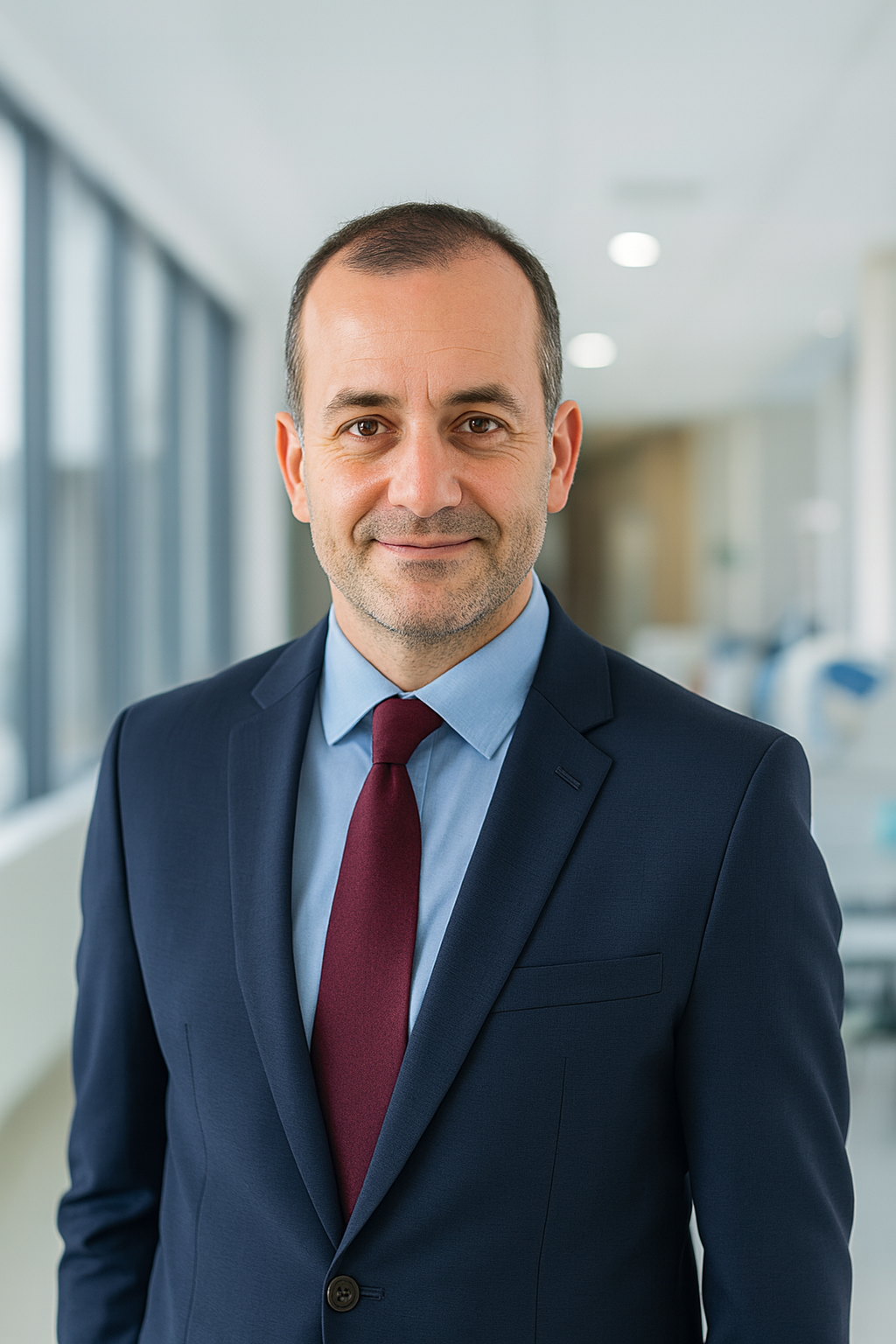
Murat Sargin
Board Member at Cardiac Surgery
Social Media
We concluded our association's search for a social media agency in Edvido. We have a great cooperation with the team we work with.
Metin Uysal
Etkin Group
Software
We were looking for the right company to develop our digital product. Thanks to Edvido, we quickly found the software company that best suited our needs and vision. The process was both fast and highly efficient; working with the right team gave our project a strong start.

Sedat Coşkun
Epikplus CEO
Business Partnerships
If you want to grow, becoming an Edvido member is a must.
Blog & Insights
Explore our marketing and software focused content








Boston briefs often start with a device, not a screen
A large share of the work commissioned here is not a standalone consumer product. It is a companion to something physical: an instrument in a lab, a sensor worn by a patient, a reader on a loading bay, a teaching rig in a classroom. That changes the very first question you should put to a mobile app studio, because pairing behaviour, background connection handling and firmware version drift are where these projects fail, and none of it is visible in a wireframe.
If your product talks to hardware over Bluetooth, ask each candidate to describe what happens when the link drops halfway through a transfer, how they test against more than one firmware revision, and whether they have shipped anything that had to keep collecting data while the screen was off. Firms that have only built content and commerce products answer this in generalities. The ones who have genuinely done it start talking about background execution limits and retry logic before you finish the question.
Regulated data lengthens the approval chain, not just the build
Hospitals, research institutes and universities dominate the local buyer base, and their sign off path is longer than a commercial one. A security questionnaire, a privacy review, sometimes an ethics or institutional review board, and an information security team who will want to know where data rests and who can reach it. None of that is the supplier's fault, but all of it lands on the schedule.
So treat review as a work package with an owner and a duration, not as something that happens around the edges. Ask candidates whether they have completed an institutional security questionnaire before, whether they hold a SOC 2 report or can evidence equivalent controls, and who on their side writes the data flow description your compliance team will read. A mobile app that stores clinical or student records on the device needs that description before anyone approves a pilot. A studio that has been through this once will hand you documents. A studio that has not will promise to produce them later, which is how a launch slips by a quarter.
The mobile app maintenance line nobody writes into the brief
Both platform owners ship a major operating system release every year, and each one can quietly break permissions, background behaviour or a dependency you never chose. Certificates expire. Store policies tighten. A mobile app that nobody touches for a year is not stable, it is drifting toward rejection at the next submission.
Ask for maintenance to be priced separately and explicitly: who watches crash reporting, what the response time is for a store rejection, whether annual platform releases are covered or billed as change, and what happens to your build pipeline if the person who set it up leaves. Buyers who skip this get a quote that looks cheaper and an unbudgeted emergency twelve months later.
Ask who holds the developer accounts before you sign
This is the single most expensive detail in a mobile app contract and it takes one sentence to fix. The App Store and Play Console accounts, the signing keys, the push notification credentials and the analytics properties should be registered to your organisation, with the supplier added as a collaborator. Not the reverse.
When the accounts belong to the agency, leaving them is not a commercial negotiation, it is a migration, and the store listing, the reviews and the installed base are hostage to it. Write the ownership into the contract, ask for the handover artefacts to be named in the statement of work, and confirm that the source repository, the build configuration and the environment variables come with them.
Acquisition is a continuity risk in this market specifically
Local studios are acquired by larger consultancies with some regularity, and the effect on a client is rarely dramatic on day one. It shows up later, when the senior people who knew your codebase are moved onto larger accounts, when the hourly structure is rebased, or when small maintenance work stops being interesting to the new owner.
You cannot prevent that, but you can survive it. Insist on documentation that a stranger could use, a repository you control, and at least one named engineer whose departure or reassignment triggers a conversation rather than a surprise. Ask any candidate what happens to your mobile app retainer if their team doubles in size next year. The honest ones will tell you that small clients get deprioritised, and will explain what they do about it.
Native, cross platform or no app at all
A serious mobile app supplier should be willing to talk you out of one. If your requirement is occasional access to information, a responsive site delivers it without asking anyone to install anything, and the cost of ownership is a fraction of a native build. The case for an installed product rests on specific capabilities: background work, hardware access, offline use, reliable notifications, or a usage pattern frequent enough that an icon on a home screen earns its place.
When an installed product is right, the native versus cross platform choice follows from how much of your value sits close to the device. Heavy sensor, camera or connectivity work pushes toward native code on each platform. Form driven and content driven products are well served by a shared codebase, which usually reduces build and maintenance effort. Ask each firm which they would choose for your case and, more revealingly, which they would not, and why.
How to brief three Boston suppliers and get comparable answers
Three mobile app firms briefed identically tell you far more than eight briefed loosely. Give every one of them the same short document: what the product must do, who uses it and in what conditions, what it integrates with, what data it touches, and what you will consider a successful first release. Then compare their assumptions and exclusions rather than their totals, because that is where the difference in understanding actually lives.
Ask for references from the people who ran the product after launch, not the executive who signed the contract. They will tell you whether support tickets were answered in week thirty as promptly as in week two. If your scope also covers a public website or backend systems, it is usually better to engage specialists for each part than to ask one firm to be strong at everything, so compare local web development suppliers and custom software firms in the same market separately. The wider supplier picture, including neighbouring markets such as New York and Philadelphia, sits in the mobile application development directory. Once your requirement is written down, send the same brief to several verified studios at once and judge them on the questions they ask you back.